
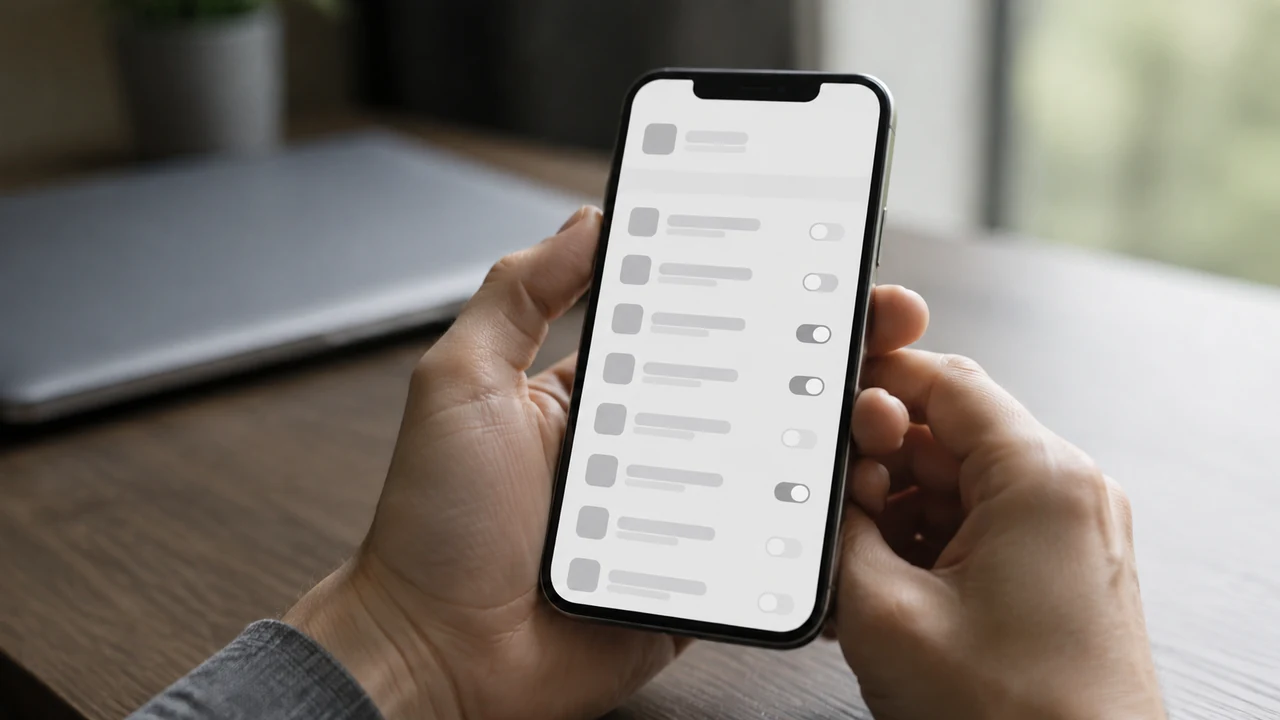
Phone apps often ask for access to location, photos, contacts, microphones, cameras, calendars, nearby devices, and other parts of your digital life. Some access is essential: a navigation app needs location while guiding you, and a camera app needs the camera. Other requests are optional, broader than the task requires, or left over from something you no longer use. A deliberate permissions review helps you keep useful apps working while reducing unnecessary access.
This is not a race to switch everything off. Permission systems differ among phones, operating-system versions, app versions, and managed devices. Start by understanding what you use, make one measured change at a time, and test the app afterward. If a setting name or consequence is unclear, pause and consult the current official documentation for your exact device and service. Avoid deleting data, resetting the phone, or removing an important account just to change a permission.
Prepare before changing access
Choose a quiet time when you can test calls, messages, navigation, authentication, accessibility tools, health-related workflows, and work apps if you rely on them. Charge the phone and connect it to a trusted network. If the phone belongs to an employer, school, or family-management system, some controls may be required or centrally managed. Do not try to bypass them; ask the administrator what is expected.
Make sure you know how to unlock the phone and recover the primary device account. A permissions review should not normally affect account recovery, but it is sensible to confirm that important credentials and recovery methods are available before changing any security-related setting. The guide to storing account recovery information safely can help you create a protected record without leaving secrets in an exposed note.
List the apps that are genuinely time-sensitive. Examples may include a medical device companion, an authenticator, a transportation app, an accessibility tool, or a work communication app. For these, read the developer’s current documentation before restricting background activity, Bluetooth, notifications, or local-network access. When consequences are uncertain, defer the change until support is available.
Use both permission views
Most modern phones provide two useful routes: open an individual app’s settings to see everything it can access, and open a permission category to see every app with that type of access. Names and paths vary, so use Settings search or the manufacturer’s official guide rather than relying on a memorized sequence.
The app view answers, “What can this one app reach?” It is helpful for unfamiliar apps, recently installed apps, and services holding sensitive information. The category view answers, “Who can reach my location, camera, or contacts?” It exposes surprising combinations that are easy to miss when reviewing apps individually. Use both views during the first checkup; later maintenance can be shorter.
| Permission area | Question to ask | Cautious starting choice |
|---|---|---|
| Location | Does the feature need location now, in the background, or not at all? | Allow only during use or choose an approximate option when sufficient |
| Photos and files | Does the app need the whole library or only items you select? | Choose selected items when the workflow supports it |
| Camera and microphone | Do you intentionally capture, scan, call, or record with this app? | Allow for the task, then review if use is rare |
| Contacts and calendar | Is full address-book or schedule access necessary? | Decline unless a clear feature depends on it |
| Nearby devices and local network | Does the app connect to accessories or equipment nearby? | Allow only for a known connection you use |
| Notifications | Is the alert timely and useful, or merely promotional? | Keep essential alerts and quiet or disable the rest |
Start with apps you do not recognize or use
Scan the installed-app list slowly. An unfamiliar name is not automatically malicious; it might be a system component, a carrier utility, an accessibility service, or software installed for a device. Search within the phone’s own app information and official documentation before acting. Do not disable system components based on a vague name or a frightening social-media post.
For a normal app you no longer use, first consider whether it contains drafts, downloads, recordings, game progress, authentication data, or files stored only on the phone. Export anything worth keeping through the app’s supported process. Sign out if appropriate, remove connected account access when the service offers it, and then uninstall through the normal device controls. Revoking permissions alone does not necessarily close an online account or erase cloud-held data.
If you keep a rarely used app, remove permissions it does not currently need. The app can usually request access again when you choose a related feature. Read the prompt at that moment instead of approving reflexively. This creates a useful connection between access and an intentional action.
Review location with context
Location can support maps, weather, ride pickup, delivery, emergency functions, photo organization, and device finding. The useful question is not simply whether an app “needs location,” but when and how precisely it needs it. A map may need precise location while navigating; a store finder may work with approximate location only while open.
Background location can enable a deliberate feature when the app is not visible, but it also expands access. Keep it only where you understand the benefit and use it. After changing location access, test the relevant workflow in realistic conditions without putting yourself at risk. Do not discover during an urgent trip that navigation, family safety, or an accessibility function no longer behaves as expected.
Location may also be inferred from network addresses, nearby wireless signals, photos, account activity, or information you type. A phone permission is therefore not a complete privacy switch. Review location history, sharing relationships, and account controls inside services you use, particularly after travel or a change in household relationships.
Limit photo, file, contact, and calendar access
An app that attaches one picture may not need continuing access to the entire photo library. If the phone offers an item picker or limited-library option, use it when it supports your workflow. Test adding, editing, and saving. Remember that items already uploaded or copied into an app are not pulled back merely because you later revoke library access.
File access deserves similar care. Understand whether an app sees one selected document, an app-specific folder, or a broader storage area. Before removing access, save unfinished work and confirm where exported files went. For a more reliable storage system, see the guide to organizing and managing PDF files.
Contacts and calendars reveal relationships and routines, including information about people who never installed the app. Grant access when a feature genuinely needs it, such as contact selection or calendar synchronization, and look for a manual-entry alternative when full access feels disproportionate. After revoking calendar access, verify that important events still exist in their original calendar account rather than only inside the app.
Treat camera and microphone indicators as clues
Camera and microphone access is expected during calls, recording, scanning, voice messages, and content creation. It is less expected when you are not using such a feature. Pay attention to the phone’s access indicators and privacy activity views, if available, but interpret them in context. A recently used indicator may reflect a feature you just invoked rather than ongoing surveillance.
If an app appears to use a sensor unexpectedly, close it, review its permission, and check its official help information. Reproduce the behavior cautiously if useful, noting the time and action. Update through the official store when an update is available. If concern remains, remove access and contact the developer or device support. Do not install an unknown “cleaner” or security utility offered by an alarming advertisement.
For apps that only occasionally scan a code or record a clip, granting access for the session or while using the app may be enough where supported. Confirm the save destination before changing access so you do not strand an important recording.
Understand nearby-device and network permissions
Bluetooth, nearby-device, and local-network permissions can support headphones, wearables, printers, televisions, smart-home equipment, vehicle systems, and direct transfers. A denial may stop discovery or control without clearly explaining why. Map each permission to equipment you actually own before deciding.
When a device stops connecting after a change, restore the last permission first and retest. Avoid deleting pairings, resetting network settings, or factory-resetting either device until you have checked current official troubleshooting instructions and preserved anything needed for recovery. The guide to fixing common Bluetooth problems provides a reversible troubleshooting order.
Local-network access is not the same as internet access. An app might use it to find a printer or cast media while still reaching its online service separately. Review in-app account and cloud controls too, and disable remote integrations you no longer use through their official interfaces.
Review notifications without silencing safety
Notifications expose information on the lock screen and compete for attention, although they are often managed separately from privacy permissions. Preserve alerts needed for account security, medication, accessibility, travel, work, or family coordination. For everything else, decide whether to allow alerts, deliver them quietly, hide previews, or disable a noisy category if the phone and app offer those choices.
Test security alerts before relying on them. Turning off all notifications for an authenticator, bank, email account, or device-finding service could delay a warning or approval request. Lock-screen privacy can often be improved by hiding message content while retaining the fact that an alert arrived.
Check access beyond device permissions
An app may retain data in its online account even with every phone permission revoked. Open the service’s trusted settings and review signed-in devices, connected apps, sharing links, family or team members, advertising choices, and stored history that matter to you. These controls change, so follow the service’s current documentation rather than assuming a universal menu.
Also review accessibility access, keyboard access, device administration, profile or certificate installation, and virtual private network configurations if your phone exposes them. These can be powerful and may be legitimate for work, security, or accessibility. Do not remove an unfamiliar managed profile casually; identify its owner and purpose first.
If you suspect an account compromise, permissions cleanup is not sufficient. Use a trusted device, follow the provider’s official recovery flow, change exposed credentials, review sessions and recovery methods, and preserve evidence when fraud or harassment may be involved. The personal data breach response plan helps organize those steps.
Make changes in small batches
Change one category or a few low-risk apps, then use the phone normally for a day. Test capture, sharing, navigation, calls, accessories, and critical alerts. If something breaks, the small batch makes the cause easier to identify. Restore only the permission the feature actually needs, using the narrowest supported scope.
Keep a short private note of consequential changes, especially for a family member’s device or a phone with accessibility needs. Record the app, permission, date, reason, and test result—not sensitive data. If you assist someone else, explain each change and let the account owner make decisions. Never ask them to disclose passwords or recovery codes unnecessarily.
Frequently asked questions
Should I deny every permission until an app breaks?
No. That can interrupt critical functions and create confusing prompts. Begin with unused apps and obviously unrelated access, then narrow permissions deliberately and test.
Does revoking a permission delete data already collected?
Usually not. It limits future device-level access, but copies already stored by the app or service may remain. Review the service’s account, export, retention, and deletion controls separately.
Why does an app ask again after I denied access?
You may have selected a feature that depends on that access, the app may be explaining an alternative, or its design may be overly persistent. Read the system prompt, decline again if unnecessary, and reconsider keeping an app that cannot respect your choice.
Are system apps safe to ignore?
System components can have broad access because they provide core functions, but their roles vary. Inspect available descriptions and official device documentation. Do not disable or remove a component solely because its name is unfamiliar.
How often should I review app permissions?
Review after installing many apps, changing jobs or devices, ending a sharing relationship, or noticing unexpected access. A brief periodic check is useful, but there is no need to toggle settings constantly.
Final permission-review checklist
- Confirm device and account recovery before changing critical settings.
- Review both each sensitive category and each high-trust app.
- Remove unused apps only after preserving needed local data.
- Choose while-in-use, approximate, or selected-item access when it meets the purpose.
- Preserve and test essential navigation, authentication, accessibility, health, and safety functions.
- Investigate sensor indicators in context and avoid alarm-driven utilities.
- Review notifications, connected accounts, sharing, and cloud-held data separately.
- Make small batches of changes and record important results.
A useful permissions review leaves your phone functional, understandable, and easier to trust. The goal is not a screen full of denied switches. It is a clear relationship between every sensitive capability and a feature you chose to use, supported by testing and a recovery path if the setting has an unexpected consequence.